Who can diagnose ADHD in the UK?

A plain-English guide for clinicians on where you fit within UK ADHD assessment frameworks, including NICE NG87, AQAS and CAAQAS.

Use it to think through your registration, training, supervision and scope of practice before you start assessing.

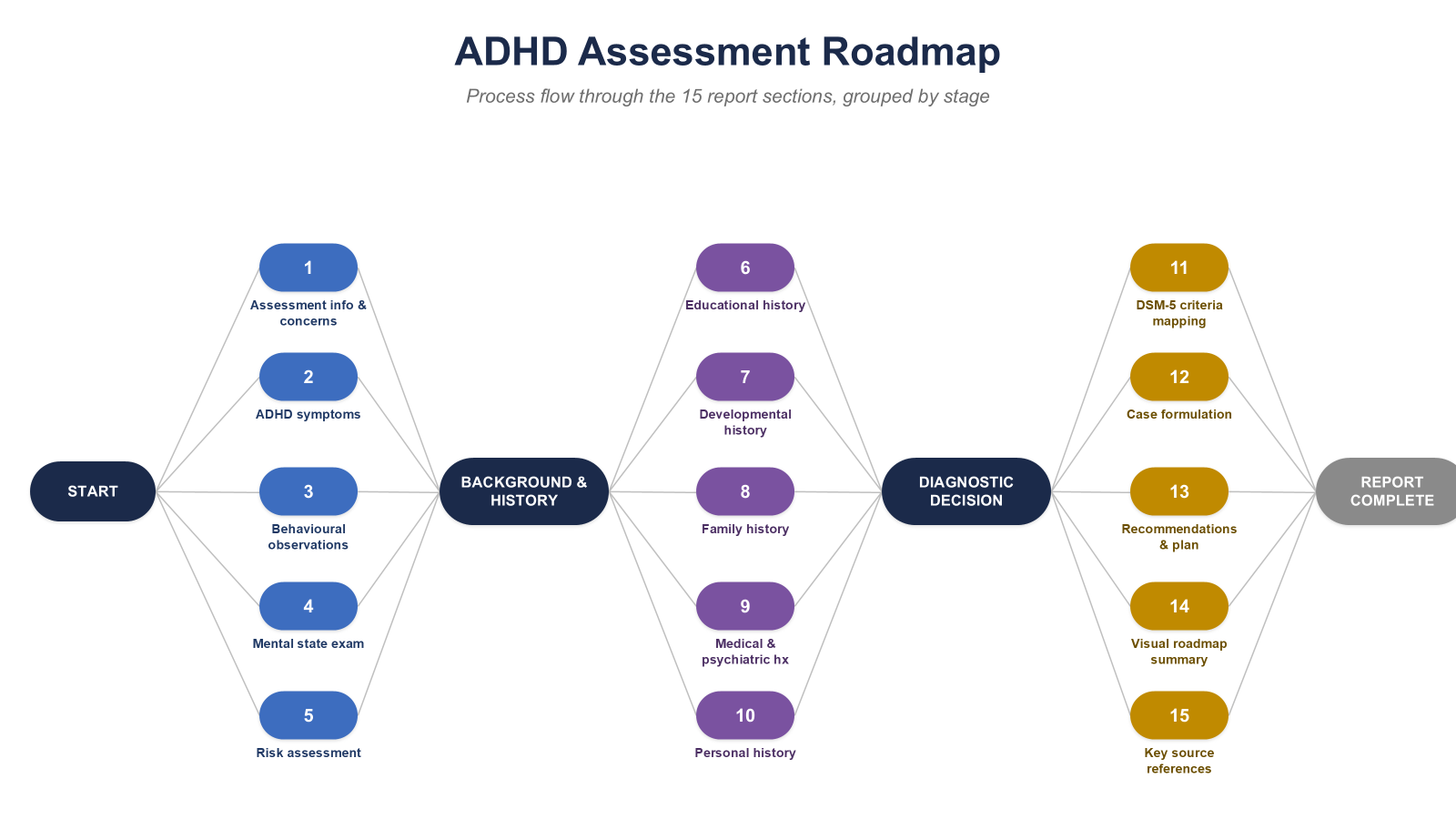
ADHD assessment roadmap showing the stages of becoming an ADHD assessor

Who can assess and diagnose ADHD

Who can diagnose ADHD in the UK?

NICE guideline NG87 says ADHD should only be diagnosed by a specialist psychiatrist, paediatrician or another appropriately qualified healthcare professional with training and expertise in diagnosing ADHD.

Whether a particular professional can carry out diagnostic assessments also depends on their clinical experience, scope of practice, competence, supervision and local governance.

Do you have to be a psychiatrist or doctor?

Not necessarily. UK guidance recognises that appropriately qualified professionals from a range of backgrounds can contribute to ADHD diagnostic assessment.

Whether someone practises independently, under supervision or as part of a team depends on their background, experience, ADHD-specific training, competence and supervision.

Can nurses, psychologists and other professionals assess ADHD?

Potentially, yes. UK consensus guidance includes psychiatrists, paediatricians, psychologists, advanced nurse practitioners, mental health nurses, specialist pharmacists and other appropriately qualified professionals at different levels of practice.

The right level depends on registration, experience, competence, ADHD-specific training, supervision and scope of practice.

Can GPs be involved?

Yes, depending on their training, experience and supervision. Under the adult consensus standards, GPs developing a special interest may work within supervised assessment arrangements.

For children and young people, the level of involvement may differ and should be considered within CAAQAS and local governance.
The AQAS and CAAQAS frameworks

What are AQAS and CAAQAS?

AQAS is the Adult ADHD Assessment Quality Assurance Standard. CAAQAS is the ADHD Assessment Quality Assurance Standard for Children and Teenagers.

They are UK professional consensus standards describing good-quality ADHD assessment and the experience, competencies and supervision expected of the professionals involved. The two differ because assessing children needs attention to their developmental stage.

What are the levels of assessor practice?

For adult assessment, professionals may contribute at different levels:

Independent assessor: an appropriately experienced clinician practising independently after relevant ADHD-specific training.

Supervised assessor: a clinician developing or practising assessment skills with appropriate clinical supervision.

Assistant assessor: a professional who contributes to parts of the assessment under specialist oversight but does not diagnose independently.

Other clinicians also play an important role in screening and referring people on for specialist assessment.

How much supervised experience is needed?

The adult framework described in our training materials sets out ADHD-specific training followed by roughly 10 to 20 supervised ADHD assessments with reflective learning, alongside ongoing supervision.

Exact requirements depend on your background, experience, competence, scope of practice and setting.

Is ongoing supervision important?

Yes. Supervision is a key part of developing and keeping safe practice. UK consensus guidance describes at least monthly supervision for a number of supervised assessment roles.

What a good assessment involves

What does a comprehensive ADHD assessment involve?

NICE describes diagnosis as based on a comprehensive assessment including a full clinical and psychosocial assessment, ADHD symptoms across different settings, a full developmental and psychiatric history, observer or collateral information where appropriate, a mental state assessment and professional clinical judgement.

It should look at both symptoms and their impact on everyday functioning.

Are rating scales enough to diagnose ADHD?

No. Rating scales and structured tools add useful information, but diagnosis needs the wider clinical picture: history, psychosocial information, symptoms across settings and collateral information.

Is assessing children different from assessing adults?

Yes. It needs knowledge of typical child development, a developmental history, information from parents, carers, teachers and SENCos, age-appropriate interviewing, behaviour across different environments, awareness of other developmental and mental health conditions. Risk and safeguarding need particular attention too.

Professional standards and your next steps

What professional standards apply?

You stay accountable to your own regulator, such as the GMC, NMC, HCPC or GPhC.

Common principles include working within your competence, keeping skills up to date, patient safety, clear communication, confidentiality, consent, accurate records, seeking supervision and referring on when something is outside your competence.

Is a training course enough to diagnose independently?

Training is an important part of building competence, but it doesn’t automatically give you authority to diagnose. Think about your registration, existing experience, scope of practice, AQAS or CAAQAS guidance, supervised experience, ongoing supervision and local governance.

How do I know if I could become an ADHD assessor?

Start with three questions. Do you hold appropriate professional registration? Where does your background fit within AQAS or CAAQAS? Do you have, or are you building, enough ADHD-specific training and supervised experience?

Everyone’s pathway is individual to their background and intended scope of practice.

What should I think about before enrolling?

Your registration and clinical experience, your current scope of practice, whether you’ll work with adults, children or both, the relevant AQAS or CAAQAS guidance, access to supervision, opportunities for supervised assessments. Your organisation’s governance requirements matter too.

Training supports professional development and competency building. Healthcare professionals remain responsible for working within their professional registration, competence, supervision requirements and local clinical governance.

Want the detail on regulators and legislation? Read Professional and statutory requirements for ADHD assessment.


Ready to book?

The next course is on Saturday 31 October 2026. Groups are kept small so everyone gets time to ask questions.

Questions first? Email contact@adhdtrainer.co.uk